Behind the surface fleet: Delivering Australia’s Hobart Class Destroyers by a sovereign workforce
Raytheon Australia’s enduring collaboration through the Air Warfare Destroyer Alliance has ensured a lasting sovereign capability for the Australian Navy to fight and win at sea
It’s 2006, and Roger Leonard-Down, an accomplished electronic warfare systems and hardware design engineer with a background in Air Force assets, is leading the Undersea Warfare Integrated Product Team for the Hobart Class Destroyers (DDG).
By 2007, he finds himself in the enviable position of steering a pivotal project, following the Australian Government’s signing of two contracts for the design, build, and delivery of three Hobart Class guided missile destroyers and their support system — the largest shipbuilding acquisition project for its time.
The announcement of the SEA 4000 Air Warfare Destroyer program, or AWD, delivered by the Air Warfare Destroyer Alliance, aligned with Raytheon Australia’s vision to make a profound impact on naval capabilities.
“We were aware of the colossal task ahead… the DDGs were the most capable and lethal warships that Australia had ever designed, constructed, and commissioned in-country by a dedicated, sovereign workforce,” Leonard-Down said.
The Air Warfare Destroyer Alliance
The construction of the ships involved a three-way alliance-based contract between Raytheon Australia, ASC AWD Shipbuilder and the Commonwealth of Australia (represented by the Department of Defence).
“The contract saw Raytheon Australia take on the role of systems engineer, responsible for designing and integrating the combat systems into the platform,” Leonard-Down said.
The AWD Alliance-based approach delivered a unique, collaborative organisational structure – the first time this approach had been used in sovereign naval shipbuilding.
“This collaborative structure required the industry to uplift, upskill and align on enterprise behaviours to deliver optimal capability outcomes – an achievement made possible by the shared value sets fostered within the Alliance,” Leonard-Down said.
The DDGs were to be named and scheduled for delivery as follows:
- HMAS Hobart in June 2017
- HMAS Brisbane in July 2018
- HMAS Sydney in February 2020
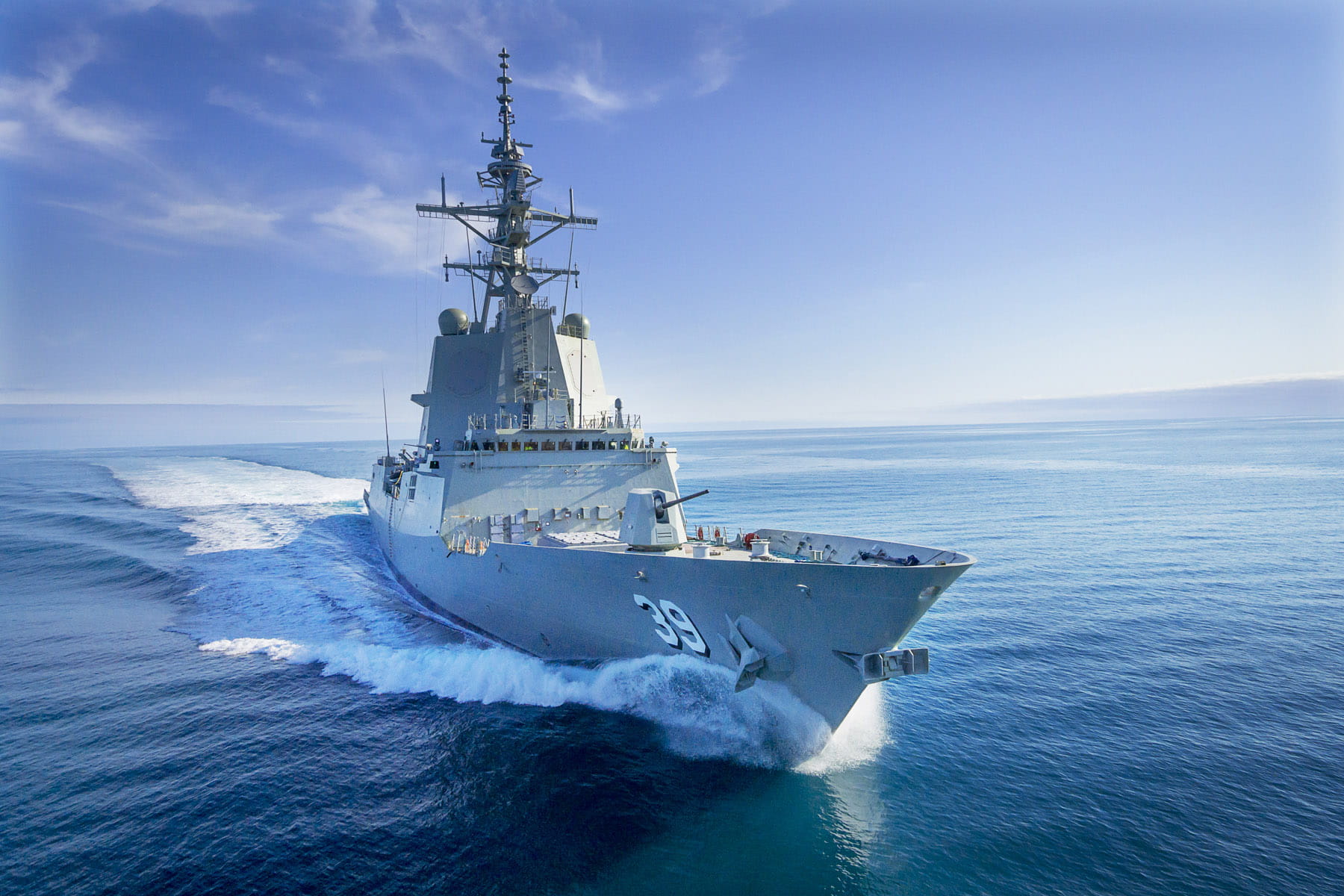
In March 2017, the AWD Alliance celebrated the completion of the Sea Acceptance Trials by HMAS Hobart, signifying the first time the ship’s platform and combat systems were tested together as a complete mission system.
“During these first-of-class trials, Raytheon Australia successfully completed integration and test of all 10 major subsystems, including the Aegis Weapon System,” Leonard-Down said, “delivering more than 3,500 major pieces of combat system equipment, highlighting our strength of expertise in combat systems integration.”
Celebrating major milestones
HMAS Hobart was launched on May 23, 2015, in Adelaide, Australia, by the Air Warfare Destroyer Alliance.
Danielle DeSantis, who served as Raytheon Australia’s director of public affairs for the AWD Alliance, recalls the launch attended by 7,000 guests as one of her fondest professional memories.
“We were joined by a VIP delegation of senior cabinet officials from government to senior Navy and industry, but the best part was the thousands of employees and their families watching as we lowered HMAS Hobart into the water,” DeSantis said.
“Ship sponsor Nicola Hodgman launched HMAS Hobart by christening it with a special sparkling Shiraz bottle from the Adelaide Hills winery Bird in Hand, named after the ship – it was a major milestone for the program and was followed by two years of work alongside sea trials before its commissioning in September 2017,” she said.
Reflecting on the journey, DeSantis highlighted that striving for best for program outcomes was at the core of the Alliance.
“Our common goal was to deliver the Royal Australian Navy their newest and most lethal surface vessel yet.”
An engineering legacy in the making
In November 2025, Raytheon Australia celebrated the 10-year anniversary since HMAS Hobart’s successful “Light Off” of the vessel’s Combat System.
Lee Rigano assumed the role of foreign military sales program manager on the AWD program before transitioning to operations planning manager. Rigano participated in sea trials for all three ships and was instrumental in integrating the Aegis test team into the Raytheon Combat System Test and Activation delivery.
“The AWD-Alliance model was an innovative yet novel approach that, despite challenges, achieved the intended purpose — best program outcomes,” Rigano said.
“Achieving the light-off milestone onboard HMAS Hobart was the pinnacle of my career… the opportunity to support the sea trials and deliver such a significant capability to the Navy,” he said. “The DDGs are breathtaking ships and provided a major step forward in capability.”
Brad Ferguson built his career on the AWD program, starting as a technical lead and progressing through five different roles over 10 years, culminating as the combat systems chief engineer. He oversaw Raytheon Australia’s 350-strong engineering workforce in integrating and delivering the ships through sea trials.
“I have heard it said that ‘Navy ships are the most beloved of any Defence asset.’ This was particularly true for me. When disembarking NUSHIP Hobart at the completion of the two-week sea trials program, the ship had become far more than a job, but an indelible part of who I am. I am incredibly proud of the capability we helped deliver to the Navy,” Ferguson said.
Raytheon Australia continues to provide in-service sustainment and stewardship of the combat systems of the three Hobart Class destroyers, as a member of the Destroyer Enterprise.
The Destroyer Enterprise is the collaborative industry partnership responsible for the sustainment of the three Hobart Class air warfare destroyers.
Shaping today’s program approach
Twenty years on, the collaborative approach pioneered by the AWD Program, provides a blueprint for Raytheon Australia’s sustainment programs today.
The provisional acceptance of Australia’s most capable warship, HMAS Hobart, in 2017, marked another milestone for Raytheon Australia, coinciding with surpassing 10 million hours of complex combat system integration – a first for the Australian defence industry.
Through developing the Australian workforce in partnership with established processes, tools and capabilities, Raytheon Australia has successfully transferred knowledge of combat system architecture, design, integration and testing to Australia’s future defence programs.
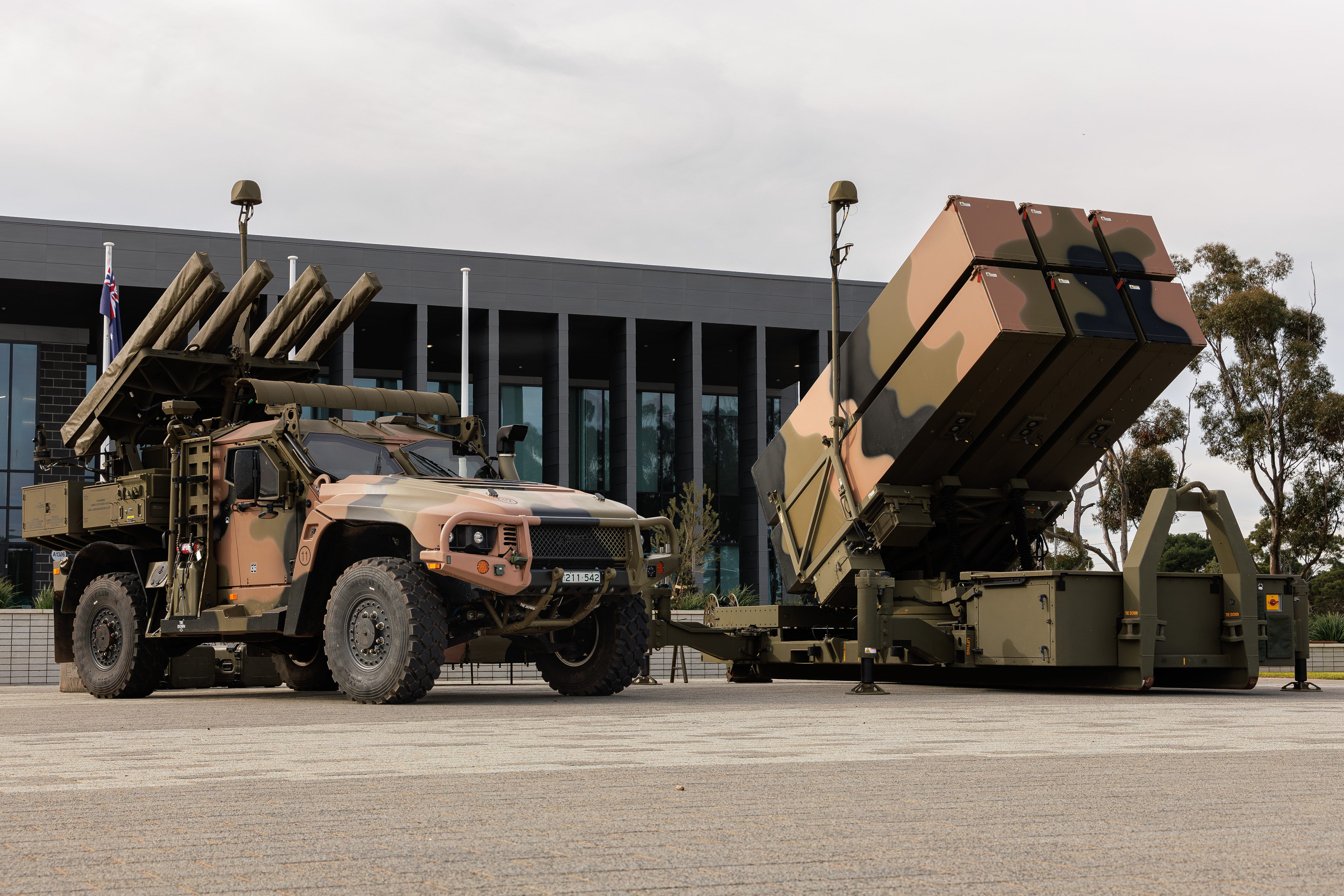
Raytheon Australia has implemented combat system integration experience gained on the Air Warfare Destroyers to advance the Land 19 Phase 7B program, facilitating the delivery of an enhanced National Advanced Surface to Air Missile System to the Australian Army.
Additionally, Raytheon Australia’s Minor Vessels Capability Life Cycle Manager program is also maturing a whole-of-capability, multi-class asset management approach supporting the Naval Shipbuilding and Sustainment Group.
The NSSG Maritime Sustainment Model defines sustainment as a comprehensive, whole-of-life concept, from the design/acquisition phase through to disposal of a vessel.
Andrew Vlass, chief of requirements and capabilities, highlights Raytheon Australia’s ongoing investment in sovereign skills transfer, which is delivering sovereign capability for Defence.
“The complexity of the Air Warfare Destroyer Program that developed the Hobart Class Destroyers shaped how naval shipbuilding and maritime sustainment, including within the DDG Enterprise, operates today – driving success through enterprise behaviours such as respect, openness, teamwork, professionalism and collaboration,” Vlass said.
Today, all three DDGs are fully operational with the Royal Australian Navy and remain Australia’s most formidable warships.
The combat system is at the heart of the DDGs’ lethality, serving as a critical deterrent in the defence of Australia and providing the Navy with the sovereign capability to fight and win at sea.